
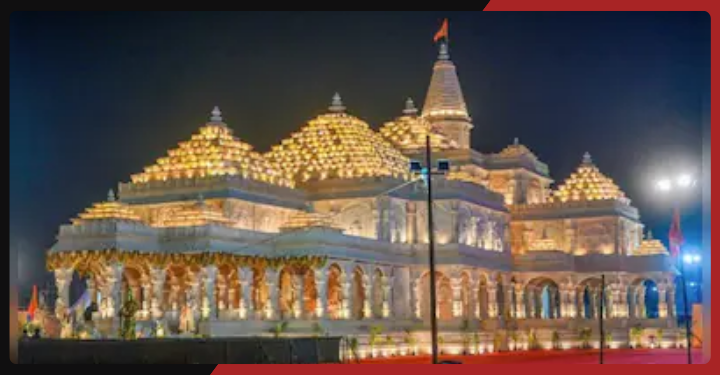
The search for a new CEO for the Ram Mandir in Ayodhya is highlighting an unusual combination of religious expectations and modern management requirements. Candidates appearing for the interview have reportedly faced questions about Lord Ram, janeu, vegetarianism, alcohol and Hindu customs, while also being assessed on leadership, administration and their future vision for the temple.
The recruitment exercise comes at a time when the Ram Mandir has become a major pilgrimage destination. Its administration now involves challenges comparable in scale to those faced by other large public institutions, including crowd management, infrastructure coordination, financial administration and emergency planning.
Reports say around 5,200 people applied for the CEO position, after which an interview shortlist of 18 candidates was prepared. The first day saw eight candidates interviewed, including former senior civil servants and military officers.
The professional background of the shortlisted candidates indicates that management experience remains an important consideration.
A former civil servant, for example, may have experience in dealing with government departments, public infrastructure and large administrative systems. A former military officer may bring expertise in discipline, logistics and crisis management. Such skills can be valuable in an institution that has to handle large numbers of visitors.
But the Ram Mandir also has a distinct religious character. The CEO cannot approach it exactly like a commercial organization. Daily administration has to operate alongside rituals and traditions.
This appears to be the context in which the reported questions about personal religious practices have been asked.
Candidates were reportedly questioned about their faith in Lord Ram, whether they wear a janeu, whether they eat vegetarian food and whether they consume alcohol. They were also reportedly asked about their knowledge of Hindu traditions and whether they would be comfortable with religiously appropriate clothing.
These questions may be intended to assess cultural familiarity. However, their relevance to professional performance remains a matter of public debate.
The more conventional aspects of the interview are equally important. Candidates were reportedly asked about leadership, administrative experience, social and religious engagement and their plans for the temple.
The application stage also sought information about education and professional background. A reported 32-question assessment examined areas such as qualifications, leadership, large-event management and the candidate’s vision for the Shri Ram Janmbhoomi Teerth Kshetra.
This suggests that the trust is looking for a multidimensional candidate.
One of the biggest responsibilities will be crowd management. The temple has to prepare for normal daily visitors as well as enormous crowds during festivals. Effective systems can prevent congestion and improve safety.
Security will also remain a priority. The CEO will have to coordinate with police and other agencies, particularly during high-profile religious events.
Infrastructure management is another major challenge. Facilities must keep pace with visitor numbers. Sanitation, drinking water, parking, transport and medical services are all part of the overall pilgrimage experience.
The financial side requires equally strong oversight. Donations and expenditure must be managed through professional systems. Accurate records, internal controls and transparent processes are essential for maintaining public confidence.
Technology could play an increasingly important role. Digital visitor services, online information, donation systems and data-driven crowd management can make temple administration more efficient.
The CEO will also have to manage people. Thousands of workers, volunteers, security personnel and service providers may be involved directly or indirectly in the temple ecosystem. Effective leadership will be needed to coordinate them.
Communication will be another key area. The temple’s decisions often receive national attention, so the CEO must be able to communicate clearly with devotees, media and government officials.
The selection committee itself includes people with diverse expertise. Reports identify retired Supreme Court judge Justice Pramod Kohli, retired Lieutenant General Vishnukant Chaturvedi and former scientist Suresh Haware as members.
The committee is expected to recommend three candidates to the temple trust. The trust will make the final decision.
The process therefore represents a fascinating experiment in leadership selection. The temple needs someone who can operate within a religious framework while meeting the standards expected of a modern organization.
The ideal CEO may need to combine cultural sensitivity with professional management, personal discipline with administrative flexibility, and respect for tradition with openness to technology.
The questions about janeu, food and alcohol have attracted attention because they are personal. But the larger story is about how an institution of enormous religious importance is searching for a leader capable of managing its future.
The final appointment will be significant not only for the temple trust but also for Ayodhya. As visitor numbers grow and the city’s religious and tourism infrastructure expands, the CEO will have a role in shaping how the Ram Mandir is experienced by millions of devotees.
The person selected will therefore face a demanding task: preserve the temple’s religious character while building an administration capable of meeting the challenges of the modern era.



More Stories
‘Regime Change’ Debate: How RSS Chief’s Remarks Intensify India’s Political Row
Voter-List Controversy Fuels CJP’s Protest as Dipke Challenges Election Commission
Tragedy in Hyderabad as Young Software Engineer Dies in High-Rise Fall