
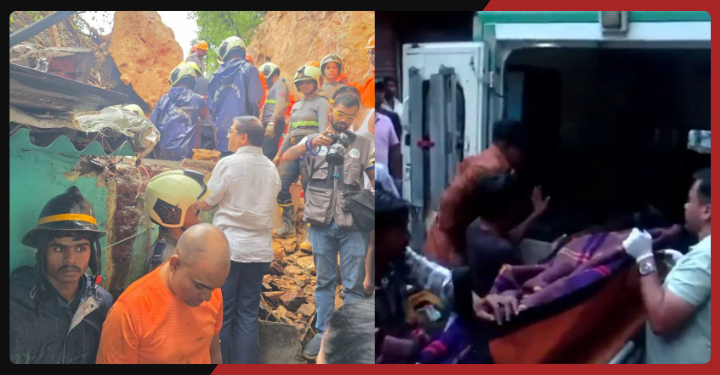
Mumbai’s latest monsoon disaster has put the city’s preparedness for extreme rainfall under renewed scrutiny after a landslide struck Kurla and caused multiple deaths and injuries. The initial casualty figure was five dead and six injured, but later reports said the death toll had risen to six.
The incident occurred at Gaushiya Chawl in Chirag Nagar around 3:48 am on Wednesday. Heavy rain had been affecting Mumbai, creating dangerous conditions across several parts of the city.
A landslide during the early morning hours presents multiple challenges. Residents are often asleep, roads can be difficult to navigate and emergency responders must work in darkness and rain.
In Kurla, rescue teams were quickly deployed after the landslide was reported. Firefighters and other emergency personnel began searching the debris while authorities tried to determine how many people had been affected.
The injured were taken to hospitals for treatment. Rescue personnel continued to examine the debris for survivors.
The incident highlights the relationship between rainfall and landslide risk. When heavy rain enters the ground, soil can become saturated. Saturated soil may lose stability, particularly on slopes or areas where drainage is inadequate. If the pressure becomes too great, sections of earth can suddenly move.
Mumbai’s geography and urban density make the problem especially complicated. The city contains numerous slopes, hills, informal settlements and densely packed neighbourhoods. Many homes are located in areas where access can be difficult during emergencies.
The city’s authorities have undertaken several measures over the years to deal with monsoon-related risks, including drainage improvements, flood mitigation projects and emergency response planning. Yet extreme rainfall events continue to test the limits of urban infrastructure.
The Kurla tragedy therefore raises an important question: how can authorities move from reacting to disasters toward preventing them?
One possible approach is stronger risk mapping. Areas vulnerable to landslides can be identified before the monsoon, allowing authorities to monitor them more closely during periods of heavy rainfall. Residents in the most dangerous locations can also be warned or temporarily relocated.
Another issue is drainage. Water accumulation can weaken soil and increase pressure on slopes. Effective drainage systems can reduce the amount of water entering vulnerable ground.
Housing safety is equally important. Densely populated settlements located near unstable slopes can become extremely dangerous during heavy rain. Authorities may need to balance the need for redevelopment with the immediate requirement to protect residents.
The Kurla incident also demonstrates the importance of timely information. Weather alerts are useful only when residents understand them and know what action to take. Local authorities need reliable communication systems capable of reaching people in vulnerable communities.
The casualty figure continued to change as rescue work progressed. Initial reports said five people had died and six were injured, while later reports confirmed six deaths.
As the immediate rescue operation moves toward recovery, authorities will likely face pressure to examine the incident carefully.
For Mumbai, the tragedy is more than another rain-related accident. It is a warning that extreme weather can expose weaknesses in urban infrastructure and housing systems within minutes.
The focus now is on supporting affected families and ensuring the safety of residents in the surrounding area. But once the emergency ends, the city will have to ask what lessons can be learned from Kurla—and how those lessons can help prevent another tragedy during the next spell of extreme rain.




More Stories
‘Regime Change’ Debate: How RSS Chief’s Remarks Intensify India’s Political Row
Voter-List Controversy Fuels CJP’s Protest as Dipke Challenges Election Commission
Tragedy in Hyderabad as Young Software Engineer Dies in High-Rise Fall