
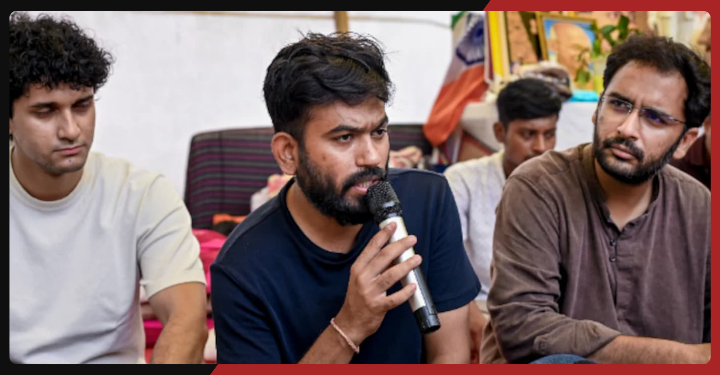
New Delhi, October 16, 2026: The controversy surrounding electoral-roll revision has emerged as the central issue behind the Cockroach Janta Party’s latest protest campaign, with founder Abhijeet Dipke declaring that he is prepared to face arrest rather than abandon his demands. The CJP has called for demonstrations in Delhi and Mumbai, seeking the resignation of Chief Election Commissioner Gyanesh Kumar and raising questions about the treatment of eligible voters.
The organisation’s planned “Lehra Do Tiranga” protests come amid continuing disagreement over the Special Intensive Revision, commonly known as SIR. The exercise is intended to review electoral rolls, but critics have questioned the scale of the reported deletions and the safeguards available to people whose names disappear from voter lists.
Dipke has argued that electoral institutions must be held accountable when citizens raise concerns about their voting rights. His statement that he is ready to go to jail has become a prominent part of the campaign, particularly after CJP leaders Ashutosh Ranka and Saurav Das were reportedly placed in five-day judicial custody following an earlier demonstration at Jantar Mantar.
The CJP says the latest protests will support the detained leaders and continue its demand for Gyanesh Kumar’s resignation. The organisation has planned a gathering at Central Park in Delhi’s Connaught Place and another at Mumbai’s Azad Maidan.
However, the allegations surrounding the voter-list revision remain contested. The Election Commission has defended the exercise as a necessary administrative process intended to identify duplicate and ineligible entries. The broader disagreement concerns whether the revision has been carried out transparently and whether people affected by errors can obtain timely remedies.
Electoral rolls are fundamental to the conduct of elections. If an eligible citizen’s name is missing, that person may face difficulties exercising the right to vote. At the same time, maintaining accurate rolls requires authorities to identify records that should no longer remain on the list.
These responsibilities make transparent procedures essential. Citizens need accessible ways to check their registration status, understand why a name has been removed and submit the required documentation to correct an error. Election authorities also need reliable mechanisms to investigate complaints and publish clear explanations of the revision process.
The CJP’s campaign has attempted to turn these administrative questions into a broader political issue. Its demand for the chief election commissioner’s resignation reflects the organisation’s view that the dispute requires leadership-level accountability. Whether that demand is accepted is a separate question from whether particular voter-list complaints can be substantiated and resolved.
The protests have also encountered restrictions in Delhi. Police have cited prohibitory orders under Section 163 of the Bharatiya Nagarik Suraksha Sanhita and the lack of permission for a large assembly at Central Park. The Delhi High Court declined to restrain the proposed demonstration and recorded the police’s assurance that it would regulate the gathering.
Police indicated that a small group of 11 people could be permitted to carry the national flag and sing the national anthem at a suitable location. In Mumbai, police reportedly granted permission for the proposed event at Azad Maidan.
Dipke has maintained that the demonstrations will be peaceful. His readiness to face arrest is intended to signal that the organisation will not abandon its campaign simply because of the possibility of detention.
Nevertheless, the most consequential outcome may depend on the evidence produced and the institutional response. Public debate can draw attention to possible errors, but resolving them requires accurate records, clear procedures and scrutiny of individual complaints.
The voter-list controversy therefore raises two interconnected questions: whether electoral administration is being conducted fairly and whether citizens have effective ways to challenge decisions that affect their participation.
As the CJP continues its campaign, the focus will remain on the Election Commission’s response, the status of the detained leaders and the ability of protesters to assemble within the applicable legal framework.



More Stories
Family-Size Verification Criteria Draw Attention in Delhi’s SIR Exercise
Tragedy in Hyderabad as Young Software Engineer Dies in High-Rise Fall
Opposition’s Protest Over Election Commission Puts Democratic Rights in Focus