
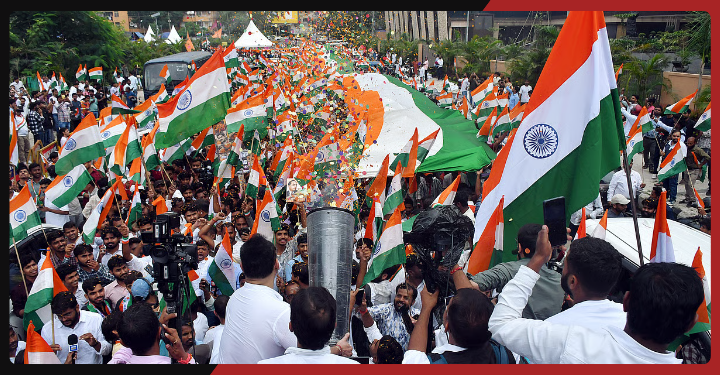
What began as a dispute over recruitment examinations in Jharkhand has transformed into one of the state’s most visible student-led protests. After weeks of demonstrations, student leaders have announced a new escalation: effigies of Chief Minister Hemant Soren and Congress leader Rahul Gandhi are to be burned, followed by a proposed gherao of the Chief Minister’s residence on August 20 if their demands are not met.
The movement has attracted thousands of students and job aspirants in Ranchi. Their principal concerns involve alleged irregularities in JPSC and JSSC examinations, particularly the 14th JPSC examination. Protesters have demanded cancellation of examinations, independent investigations and reforms to recruitment institutions.
The scale of the agitation reflects the importance of government employment in the state.
For many young people, competitive examinations represent a path toward stable employment. Candidates spend months or years preparing for examinations, often while dealing with limited job opportunities. When allegations of irregularity emerge, students fear that their efforts may not be rewarded fairly.
That fear has helped turn the examination dispute into a wider movement.
The protesters have used several methods, including marches, sit-ins, slogans and hunger strikes. Student leader Devendra Nath Mahto has also been associated with the hunger-strike phase of the agitation.
The government has responded with both political statements and administrative decisions.
Chief Minister Hemant Soren has promised examination reforms and greater transparency. More significantly, he announced in the Assembly that the 14th JPSC civil services examination would be cancelled. He also indicated that two other examinations would be scrapped and that examinations conducted by TDPL would be investigated.
Yet these steps have not ended the agitation.
The reason is that students’ concerns have evolved. They are not only asking what will happen to one examination. They want to know how the state intends to prevent similar controversies in the future.
That makes institutional reform central to the dispute.
The proposed August 20 gherao is the latest attempt to force the government to respond. Instead of marching only toward an examination commission or administrative office, protesters intend to take their demands directly to the Chief Minister’s residence.
Such a move inevitably creates a law-and-order challenge.
The previous confrontation on August 10 demonstrated the risks. Thousands of young protesters marched toward the state legislature and clashed with police. Police used tear gas, batons and water cannon to disperse the crowd.
Authorities are therefore likely to prepare heavily for the August 20 programme. The objective will be to prevent protesters from entering restricted zones while allowing peaceful demonstrations where possible.
The protesters, meanwhile, will need to maintain discipline. A peaceful mobilisation could strengthen their argument that the government should engage with them. Violence could shift public attention away from examination reforms and toward law-and-order concerns.
Political parties are also closely following the movement.
Opposition leaders have raised similar allegations about recruitment examinations and demanded investigations. The government therefore faces pressure not only from students but also from political rivals.
The proposed effigy burning of Rahul Gandhi demonstrates how the issue has moved into alliance politics. Congress is part of the ruling coalition, so the protesters are signalling that they expect accountability from the wider political establishment.
The central question now is whether the government can rebuild trust.
Announcements can provide temporary relief, but students want visible evidence that the examination system is being corrected. That could involve independent scrutiny, clear procedures, transparent publication of results and stronger safeguards against future irregularities.
The August 20 deadline gives both sides limited time.
If the government opens meaningful talks and presents a credible plan, the proposed confrontation may be avoided. If students conclude that their concerns are being ignored, the gherao could become one of the largest demonstrations of the ongoing movement.
Whatever happens, the protest has already changed the political conversation in Jharkhand. Recruitment examinations, which are normally administrative matters, have become a major public issue.
For thousands of young aspirants, the movement is ultimately about something bigger than one test. It is about whether the state’s recruitment system can give them confidence that hard work, merit and preparation will be treated fairly.



More Stories
‘Regime Change’ Debate: How RSS Chief’s Remarks Intensify India’s Political Row
Voter-List Controversy Fuels CJP’s Protest as Dipke Challenges Election Commission
Tragedy in Hyderabad as Young Software Engineer Dies in High-Rise Fall