
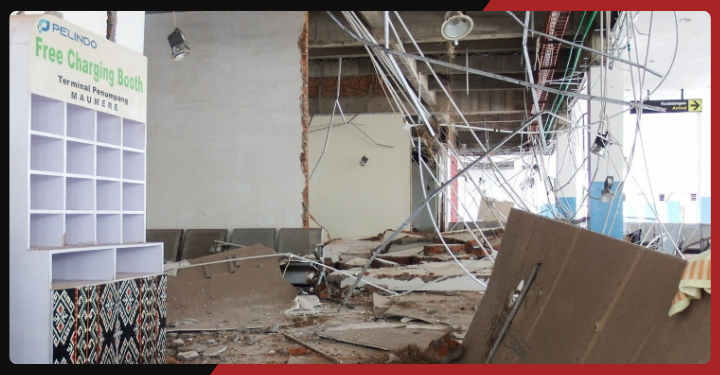
The deadly 7.7-magnitude earthquake off Indonesia’s Flores Island has once again highlighted the country’s extraordinary exposure to seismic disasters. At least 38 people were reported dead after the earthquake caused building collapses, landslides and widespread disruption across East Nusa Tenggara.
Indonesia lies along the Pacific Ring of Fire, a vast zone surrounding much of the Pacific Ocean where several tectonic plates meet. The region experiences frequent earthquakes and volcanic eruptions because of intense geological activity.
The latest earthquake struck offshore near Flores early Saturday. Its shallow depth meant that the shaking was powerful enough to damage structures across the island.
Residents reported intense movement and quickly evacuated buildings. Videos showed people running from structures while debris fell around them.
The earthquake also demonstrated that seismic disasters are rarely limited to ground shaking. Landslides were triggered in several locations, blocking roads and threatening communities. A landslide in Reok village reportedly killed 16 people.
Power outages and communication failures added to the difficulties. When infrastructure fails during an earthquake, rescue agencies can struggle to determine which communities need the most urgent assistance.
Flores also has a painful history with earthquakes. In 1992, a powerful earthquake generated a tsunami that killed around 2,500 people.
That history helps explain why authorities reacted quickly to the latest offshore earthquake by issuing a tsunami warning. Residents were advised to move to higher ground while authorities monitored the sea. The warning was eventually lifted after no significant continuing tsunami threat was detected.
The latest disaster also highlights the importance of earthquake-resistant construction. Buildings that are not designed to withstand strong shaking can collapse quickly, putting residents at enormous risk.
Emergency preparedness is equally important. Authorities need evacuation plans, emergency communication systems, accessible roads and sufficient medical capacity to respond after major earthquakes.
The earthquake affected communities across several parts of East Nusa Tenggara. Around 2,000 people evacuated, while emergency teams worked to assess damage and search for survivors.
The response has been complicated by the geography of Flores. Mountainous terrain and damaged roads can slow emergency teams, while isolated communities may remain cut off from outside assistance.
Indonesia’s experience with previous disasters has led to the development of earthquake and tsunami monitoring systems. However, even advanced warning systems cannot prevent the destruction caused by a major earthquake. Their most important role is giving residents enough time to escape secondary dangers such as tsunamis.
The latest Flores earthquake is therefore more than a single natural disaster. It is a reminder of the constant geological risks faced by millions of Indonesians.
As rescue operations continue, authorities will need to focus not only on immediate relief but also on rebuilding damaged infrastructure and ensuring that affected communities are better prepared for future earthquakes.
For the people of Flores, however, the immediate concern is much simpler: finding missing family members, treating injured residents and creating safe places for those whose homes have been damaged.




More Stories
Saudi Arabia Investigates Deadly Dammam Airport Attack as Regional Tensions Escalate
‘Regime Change’ Debate: How RSS Chief’s Remarks Intensify India’s Political Row
Voter-List Controversy Fuels CJP’s Protest as Dipke Challenges Election Commission