
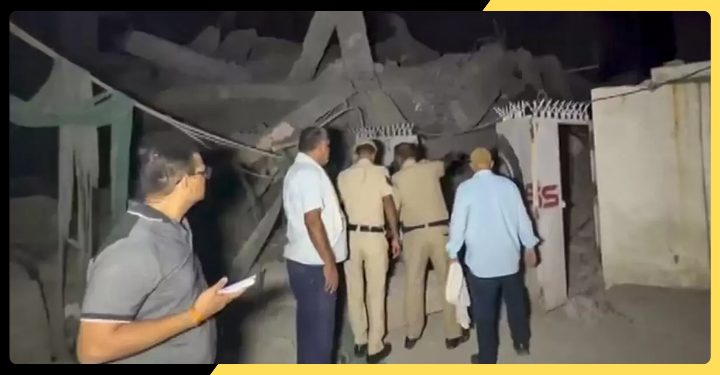
New Delhi: Rescue teams continued intensive operations after a building collapsed near Saket Metro Station in South Delhi, trapping several individuals beneath the debris and prompting a swift emergency response. Authorities confirmed that at least eight people had been rescued from the wreckage, while concerns remained over the possibility of more victims still trapped under the collapsed structure.
The incident occurred in a densely populated area close to one of the capital’s busiest metro corridors, creating panic among residents, commuters, and business owners. Eyewitnesses reported hearing a loud cracking sound shortly before the building suddenly gave way, sending a massive cloud of dust into the surrounding area.
According to local residents, the collapse happened within moments, leaving little opportunity for occupants to react. People nearby rushed toward the site after hearing cries for help from beneath the rubble. Several residents attempted to assist trapped individuals before emergency services arrived.
Authorities were alerted immediately, and personnel from the Delhi Fire Service, police department, and disaster response agencies reached the location within a short time. Rescue teams quickly established operational zones and began searching for survivors trapped beneath layers of concrete, bricks, and steel.
Officials stated that eight people were successfully rescued during the initial phase of the operation. The rescued victims received immediate medical attention before being transported to nearby hospitals. Doctors reported that some individuals suffered fractures, cuts, and bruises, while others experienced respiratory distress caused by exposure to dust and debris.
Rescue personnel faced numerous challenges while conducting search operations. The unstable condition of the collapsed structure increased the risk of further debris movement, forcing responders to proceed cautiously. Despite these difficulties, teams continued working tirelessly to locate anyone who might still be trapped.
Heavy machinery, including cranes and excavators, was deployed to remove large sections of rubble. Specialized rescue equipment was also used to improve the chances of finding survivors. Thermal imaging devices, listening instruments, and life-detection sensors helped responders identify areas requiring closer examination.
Officials overseeing the operation emphasized that every possible effort was being made to save lives. Rescue workers carefully searched through debris while maintaining communication with command centers coordinating activities on the ground.
The collapse attracted a large crowd of onlookers, prompting police to establish security cordons around the area. Authorities restricted public access to ensure the safety of residents and allow rescue teams to operate without obstruction. Traffic movement near the metro station was also affected as emergency vehicles and equipment occupied surrounding roads.
Although metro services continued to function, commuters were advised to avoid the immediate vicinity of the collapse site. Traffic diversions were introduced to reduce congestion and facilitate smooth movement of emergency personnel.
Family members of those believed to be trapped gathered near the scene throughout the day. Many anxiously awaited updates from rescue officials while hoping for positive news regarding missing relatives. Authorities established temporary assistance centers to provide information and support to affected families.
Investigators have begun examining the circumstances that led to the collapse. Structural engineers and municipal officials conducted preliminary assessments of the site to determine whether construction defects, structural weaknesses, unauthorized modifications, or maintenance issues may have contributed to the incident.
The collapse has once again drawn attention to concerns surrounding building safety in rapidly growing urban areas. Experts have repeatedly highlighted the risks posed by aging infrastructure, poor maintenance practices, and violations of building regulations. Many believe stricter inspections and stronger enforcement measures are necessary to prevent similar incidents in the future.
Residents living in nearby buildings expressed concern about the structural integrity of surrounding properties. Several community members called for immediate inspections to identify potential hazards and ensure public safety. Local representatives urged authorities to prioritize preventive measures alongside emergency response capabilities.
Government officials closely monitored developments and assured citizens that all available resources had been mobilized. Senior administrators stated that rescue operations would remain the top priority until every section of the collapsed structure had been thoroughly searched.
Medical teams remained on standby throughout the operation, ready to provide emergency care if additional survivors were found. Hospitals across the area were also placed on alert to accommodate any further casualties.
As darkness fell, powerful floodlights illuminated the disaster site, allowing rescue workers to continue operations through the night. Emergency responders displayed remarkable dedication as they searched through challenging conditions in the hope of locating survivors.
The building cave-in near Saket Metro Station serves as a stark reminder of the importance of structural safety, routine inspections, and regulatory compliance. While the rescue of eight individuals brought hope amid the tragedy, authorities remained focused on locating anyone still trapped and determining the cause of the collapse. Rescue efforts are expected to continue until all possibilities have been exhausted and every affected individual has been accounted for.




More Stories
Tear Gas and Police Action in Ujjain as Shahi Masjid Removal Protest Intensifies
Police Probe Viral Rape Claim After LPU Protest Turns Violent and Traffic Is Disrupted
Kolkata Hotel Fire Raises Fresh Alarm Over Safety in Crowded Buildings