
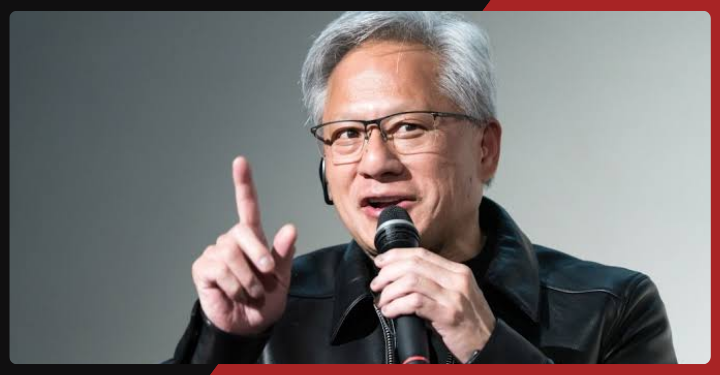
Jensen Huang’s unexpected phone conversation with President Donald Trump offered a glimpse into how much political influence the artificial intelligence industry now carries.
Huang, the chief executive of Nvidia, was speaking at the All-In Summit in Los Angeles when Trump called him. The Nvidia leader answered the phone and placed Trump on speakerphone, allowing the president to address the audience directly.
The call quickly became a major news story because it combined technology, politics and artificial intelligence in a single public moment.
Nvidia has become one of the world’s most important technology companies because of its dominant position in AI computing. Its processors are widely used to train and operate advanced AI models, making the company an essential part of the infrastructure behind the current AI boom.
That success has also increased Huang’s political importance.
Governments increasingly view advanced computing and artificial intelligence as strategic assets. AI can influence economic competitiveness, national security, scientific research and military capabilities. As a result, decisions involving Nvidia’s chips can have consequences far beyond the technology sector.
The United States is also competing with China for leadership in artificial intelligence. Semiconductor export restrictions, manufacturing investment and access to advanced computing have become major elements of the broader technology rivalry between the two countries.
Trump has repeatedly emphasized the importance of maintaining America’s advantage in AI. During his conversation with Huang, he argued that concerns about artificial intelligence should not result in excessive restrictions.
The president specifically rejected predictions that robots could take over the world. He also suggested that those promoting alarm about AI could unintentionally help America’s competitors.
Huang’s response was important because Nvidia’s future is closely connected to the continued expansion of AI. The company’s growth depends heavily on demand for computing infrastructure, particularly from major AI laboratories and cloud providers.
Nvidia’s influence is therefore not limited to producing chips. The company is part of a much larger ecosystem that includes data centers, energy infrastructure, networking equipment and AI software.
Huang’s relationship with Washington has become increasingly visible as these issues have gained importance. He has met with political leaders and participated in discussions involving semiconductor policy, AI infrastructure and international technology competition.
The live phone call represented another step in that relationship.
Instead of a private conversation behind closed doors, Trump and Huang spoke publicly in front of a technology audience. That gave the exchange symbolic importance and allowed the president’s message about AI to reach a much wider audience.
However, the political influence of technology companies also raises questions about regulation. Critics argue that companies benefiting financially from rapid AI development should not be the only voices shaping AI policy.
Supporters counter that technology executives have valuable technical knowledge and that excessive government restrictions could slow innovation.
The debate is likely to become more intense as AI systems become more powerful.
Huang’s appearance also demonstrated the unusual status he now holds. He is simultaneously a corporate executive, a major figure in the semiconductor industry and an increasingly visible participant in national conversations about artificial intelligence.
The Trump call therefore revealed more than the president’s views about AI. It showed how closely Washington and Silicon Valley have become connected around the future of computing.
As America decides how to regulate AI while competing with China, companies such as Nvidia will remain central to the discussion.
Huang’s live conversation with Trump provided a dramatic illustration of that reality. A phone call that lasted only a few minutes became a powerful reminder that the future of AI is no longer just a technology story. It is also an economic and political story with global consequences.




More Stories
Dipke’s Warning Signals Wider Clash Over Election Commission’s Role
Flydubai Crisis: Injured Indian Captain Smit Machchhar Helps Passengers Regain Control
Historic Tennessee Execution Turns Into Medical Emergency After Drug Failure