
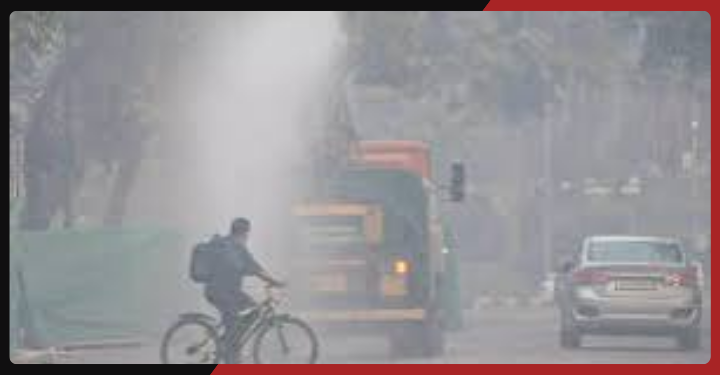
Delhi is preparing to alter the daily work routine of thousands of employees as part of its winter pollution-control strategy, with government and private offices required to limit physical attendance and adopt measures designed to reduce commuting.
Under the announced plan, 50% of employees will work from home while the remaining 50% will work from office premises during the designated winter period. The measure is intended to reduce daily traffic volumes and associated vehicle emissions.
The arrangement is accompanied by staggered office timings for government departments. Offices under the Municipal Corporation of Delhi will operate from 8:30 am to 5 pm, while offices under the Government of the National Capital Territory of Delhi will operate from 10 am to 6:30 pm.
By introducing different reporting and closing times, authorities aim to spread traffic movement across the city rather than have large numbers of employees travelling simultaneously during conventional peak hours.
Private companies have also been advised to consider staggered schedules and shared transportation arrangements. Carpooling, ride-sharing and common buses are among the measures highlighted under the winter framework.
The workplace measures are part of a wider package announced by the Delhi government on September 28. Parking charges at authorised parking facilities will be doubled from November 1 through February 28. DMRC-owned and managed parking facilities are excluded from the increased rates.
Construction activity will also be restricted. From November 1 to January 31, dust-generating demolition and outdoor civil construction will be prohibited, except for essential public infrastructure. A complete ban on construction and demolition will operate from December 10 to January 20, subject to exemptions for urgent government and emergency work.
Vehicle restrictions will begin during the same winter period. Non-Delhi registered vehicles below BS-VI standards will not be permitted to enter the capital between November 1 and January 31, with specified exemptions. CNG and electric vehicles and emergency vehicles are among the categories exempted under the announced rules.
Authorities will also intensify PUC enforcement. Fuel stations will be required to check pollution certificates under the government’s broader enforcement framework, while automatic number-plate recognition systems will be used in efforts targeting vehicles with invalid certificates and end-of-life vehicles.
The plan also places responsibilities on institutions and residential communities to prevent open burning of waste, leaves, biomass and plastic. Large buildings and major construction sites will face requirements related to anti-smog guns or mist systems.
The winter framework is intended to run annually from November 1 to February 28. It is designed to complement the Graded Response Action Plan, which introduces additional measures when air quality reaches specified levels.
For workers and businesses, the new arrangements mean changes in attendance, commuting patterns and working hours. For the administration, the measures represent an attempt to address pollution through several sources simultaneously rather than relying on a single intervention.
More Stories
Tear Gas and Police Action in Ujjain as Shahi Masjid Removal Protest Intensifies
Police Probe Viral Rape Claim After LPU Protest Turns Violent and Traffic Is Disrupted
SIR, Electoral Rolls and ECI Clarification: Why the Gyanesh Kumar Controversy Matters