
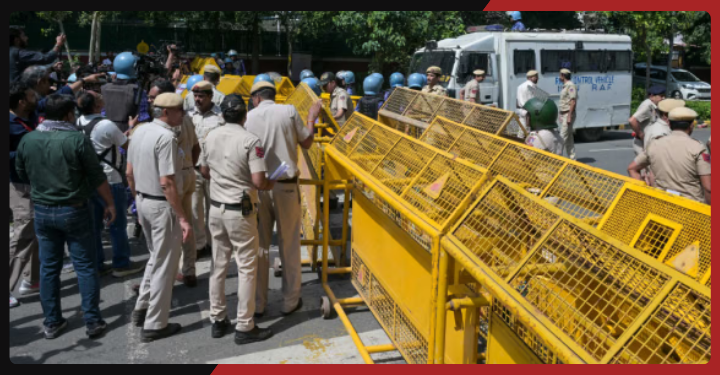
New Delhi, October 10, 2026: A demonstration planned at Jantar Mantar has brought Chief Election Commissioner Gyanesh Kumar into the centre of a political controversy over electoral-roll revision, voter rights and institutional accountability. Organised by the Cockroach Janta Party (CJP) with support from activist and student groups, the protest called for Kumar’s resignation and greater transparency in the functioning of the Election Commission.
The gathering also drew attention because YouTuber Dhruv Rathee was reportedly detained ahead of the demonstration. Security restrictions and police action around central Delhi became additional subjects of public debate.
Understanding the Special Intensive Revision
Electoral rolls are the official records used to determine who is registered to vote in an election. They must be updated to account for new eligible voters, changes of residence, deaths and corrections to inaccurate information.
The Special Intensive Revision, or SIR, has become controversial because critics have questioned whether the process adequately protects eligible voters whose details require verification.
Activists and opposition groups argue that any voter-list revision must be transparent and accessible. They have raised concerns about possible wrongful deletions and demanded clear information about how entries are reviewed.
The existence of these concerns does not establish that all the allegations are correct. Each disputed entry and any broader claim about systematic irregularities must be assessed using reliable evidence.
Why Is the CEC Facing Criticism?
Protesters believe that the head of the Election Commission should be held accountable for the institution’s handling of electoral-roll revision. Their demand for Kumar’s resignation reflects a loss of confidence among those opposing the process.
The Election Commission is responsible for important aspects of electoral administration, making public trust in its work essential. Critics argue that concerns about voter registration deserve detailed explanations and accessible mechanisms for correction.
A fair assessment, however, must distinguish criticism of an institution from proof of misconduct by an individual. Evidence, official responses and established procedures are necessary to determine the merits of particular allegations.
Why Did the Protest Attract So Much Attention?
The demonstration involved a politically sensitive issue and was planned after earlier gatherings had led to detentions in Delhi. The participation of activists, student groups and political supporters increased public interest.
Rathee’s reported detention added another element to the story. Media reports said he was detained from his Gurugram residence before the protest, but the full legal grounds and status of any charges were not immediately clear.
Police strengthened security around central Delhi, and transport restrictions were reported. The developments placed both the electoral controversy and the management of public demonstrations under scrutiny.
What Do Voters Need to Know?
For ordinary voters, the most practical issue is whether their registration details are accurate and what steps are available if an error occurs.
Citizens should use official voter-registration channels to check their details, seek clarification about disputed entries and submit correction or inclusion requests through the applicable process. They should also retain relevant acknowledgements and monitor the status of applications.
Political claims and social media discussions can draw attention to possible problems, but voters should rely on official records and verifiable information when checking their individual status.
The Importance of Institutional Transparency
The controversy demonstrates why clear communication is essential when electoral procedures change or become the subject of public concern.
Publishing understandable explanations, providing accessible grievance channels and responding promptly to documented complaints can help voters understand how decisions are made. Independent scrutiny can also help establish whether particular allegations are supported by evidence.
For the authorities, maintaining public order during demonstrations is an immediate responsibility. For electoral institutions, addressing reasonable questions about registration procedures is an equally important part of building confidence.
What Happens Next?
The political demand for Kumar’s resignation is likely to remain a central feature of the protest debate. The broader questions concern the transparency of voter-list revision, the protection of eligible citizens and the procedures available to challenge mistakes.
The clearest way forward is to separate established facts from political allegations and ensure that disputed claims receive evidence-based examination. Transparent electoral administration and lawful management of peaceful demonstrations are both essential to public confidence in India’s democratic system.


More Stories
From Delhi Detentions to Bengaluru Protest, Opposition Campaign Against SIR Gains Momentum
Dipke’s Warning Signals Wider Clash Over Election Commission’s Role
Flydubai Crisis: Injured Indian Captain Smit Machchhar Helps Passengers Regain Control