
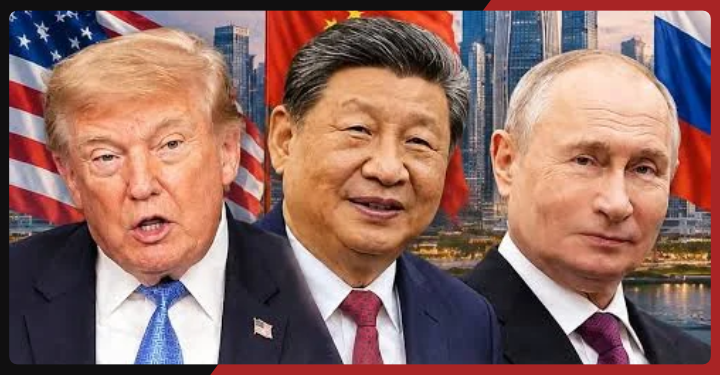
The proposed three-way summit involving US President Donald Trump, Chinese President Xi Jinping and Russian President Vladimir Putin is attracting international attention as two major conflicts continue to influence global politics.
The leaders are expected to meet in Shenzhen, China, on November 19, alongside the Asia-Pacific Economic Cooperation summit. Although nuclear security is expected to be a central subject, the wars involving Iran and Ukraine are likely to shape the diplomatic atmosphere.
Trump has indicated that he intends to discuss the Iran war with Xi and Putin. The conflict has become an important concern for Washington, particularly because of its wider implications for regional security, international energy markets and relations between major powers.
China and Russia have their own interests in the Middle East. Their diplomatic positions and relationships with regional governments make them important participants in discussions concerning the future of the region.
A conversation involving all three leaders could provide an opportunity to exchange views on the conflict and explore possible diplomatic approaches.
However, expectations of a major breakthrough remain uncertain. The three governments have different foreign policy priorities, and their positions on regional developments do not always align.
The Ukraine war presents an even more sensitive diplomatic issue.
Russia’s invasion of Ukraine in 2022 fundamentally changed relations between Moscow and Western governments. The United States has remained an important participant in diplomatic efforts surrounding the conflict, while China has maintained close ties with Russia.
Trump has repeatedly expressed his desire to bring the war to an end. His administration has pursued discussions with Russian and Ukrainian representatives through separate diplomatic channels.
However, American officials have indicated that Ukraine is not expected to be included in the agenda of the planned trilateral meeting in Shenzhen.
This position could create concerns in Kyiv. Ukrainian President Volodymyr Zelenskyy has warned against arrangements that could determine Ukraine’s future without direct Ukrainian participation.
European governments are also likely to follow the summit carefully. Any agreement affecting the security situation in Europe would have consequences for countries beyond the three participants.
The proposed meeting has consequently revived comparisons with the Yalta Conference of 1945. That historic gathering involved the leaders of the United States, Britain and the Soviet Union, who discussed arrangements for the post-war international order.
The comparison has generated debate because some observers fear that powerful countries could make decisions affecting smaller states without adequately consulting them.
The Kremlin has rejected suggestions that any agreement reached in Shenzhen could simply be imposed on other countries.
Beyond the conflicts, the summit will also focus on nuclear security. The expiration of the New START treaty in February 2026 has increased pressure for a new arms-control framework.
Trump wants China to become part of future nuclear negotiations, but Beijing has questioned whether the existing differences in nuclear capabilities make such an arrangement practical.
The meeting therefore faces several difficult diplomatic questions.
Even if the leaders avoid discussing Ukraine directly, the conflict will remain an important part of the international context surrounding their discussions.
The summit could become an opportunity for dialogue, but whether that dialogue translates into meaningful progress remains uncertain.


More Stories
Continued Russian and Ukrainian Attacks Raise Questions Over Prospects of a Lasting Ceasefire
Dnipro Train Station Attack Renews International Concerns Over Escalating Ukraine War
Saudi Arabia Investigates Deadly Dammam Airport Attack as Regional Tensions Escalate