
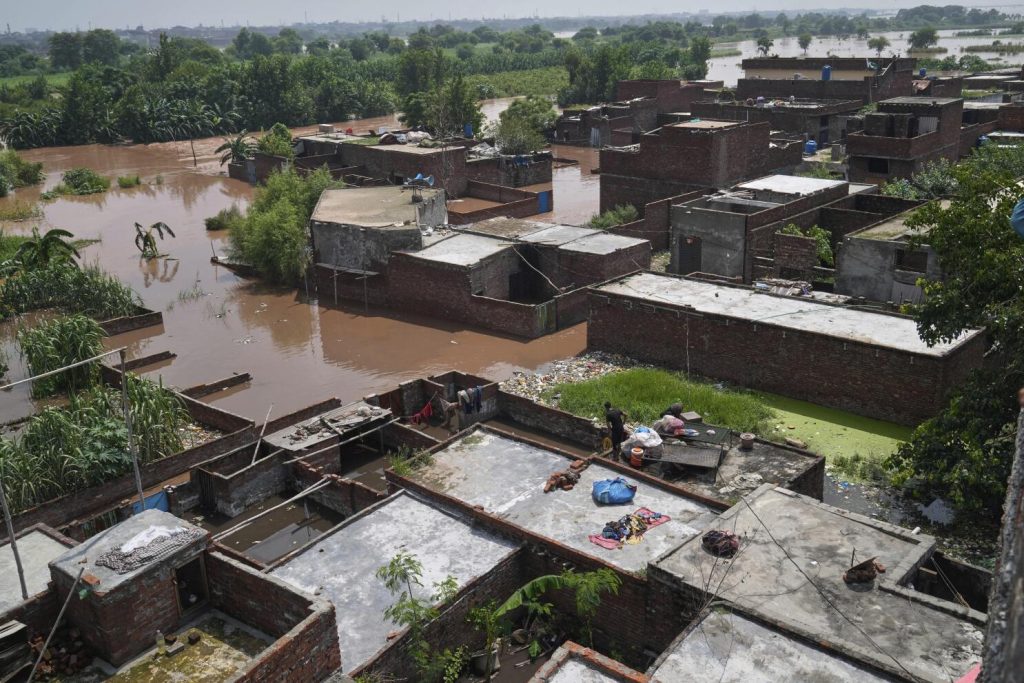
As devastating floods sweep through large parts of Punjab, thousands of residents remain stranded in submerged villages. Despite rescue teams offering assistance, many people are refusing to leave. For them, the thought of abandoning their homes and livestock—their only source of livelihood—is unthinkable.
Living on Rooftops to Stay Close to Livelihood
In the flood-hit village of Lal Singh Wala, Ajnala, Ranjit Kaur and her husband have taken shelter on their rooftop for the past three days. Though their children were sent to safety, the couple remains behind to care for their lone buffalo.
“This buffalo is all we have,” says Kaur. “If we leave, we’ll lose everything.”
This sentiment is echoed across the region. In places like Chak Aul, families have moved to higher floors or rooftops, watching over their possessions and livestock while fending off the threat of looting.
Flooding Impacts Widespread Across Punjab
At least 24 people have died due to the ongoing floods, mostly from collapsed buildings. Over 1,000 villages in districts including Gurdaspur, Amritsar, Tarn Taran, Fazilka, and Kapurthala have been severely affected. More than 61,000 hectares of farmland have gone underwater, disrupting the lives of over 1.5 million people.
Farmlands are waterlogged, homes are damaged, and essential services are crippled, creating a humanitarian crisis across the state.
Massive Rescue Efforts Face Reluctant Evacuees
Rescue operations involving the Army, BSF, NDRF, and SDRF have evacuated nearly 15,000 people. Relief camps, medical aid, and essential supplies have been provided, but many villagers refuse to leave.
Their reason? Cattle. For most of these families, animals are more than property—they are their livelihood and source of food and income. “If we go, who will feed our cows?” asked one farmer from Gurdaspur.
Shortages and Price Hikes Add to the Crisis
Even in areas where people remain, the situation is dire. Relief materials are scarce, and local markets are exploiting the crisis. Prices of basic items like polythene sheets and bottled water have soared—up from ₹130 to nearly ₹200 per kg for sheets, and double for water bottles.
Though NGOs, Sikh organizations, and government agencies are delivering dry fodder, cooked food, and clean water, many say relief is slow to reach remote villages.
Protecting Property Amid Uncertainty
Fear of theft and damage also keeps many from evacuating. With homes vulnerable to looters and cattle at risk of drowning or starvation, residents feel forced to stay and protect what little they have left.
A villager from Tarn Taran said, “We can’t take our animals in the rescue boats. We have no option but to stay.”
A Battle Between Survival and Sustenance
The flooding in Punjab has revealed more than just infrastructure issues—it has exposed the inseparable link between rural families and their land, homes, and animals. For many, staying behind in dangerous conditions is not an act of recklessness, but a desperate effort to preserve their future.
Until there’s a way to evacuate both people and livestock safely, thousands will likely continue to brave the floodwaters.




More Stories
From Delhi Detentions to Bengaluru Protest, Opposition Campaign Against SIR Gains Momentum
Dipke’s Warning Signals Wider Clash Over Election Commission’s Role
Flydubai Crisis: Injured Indian Captain Smit Machchhar Helps Passengers Regain Control