
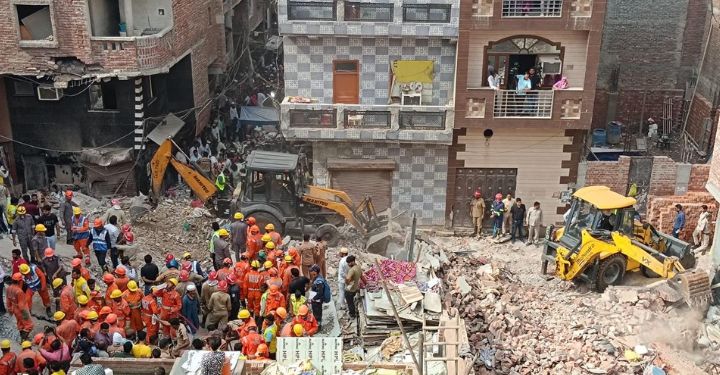
The collapse of a residential building in Mustafabad has not only caused heart-wrenching loss of life but also laid bare the deeper structural rot in Delhi’s civic governance. Four lives were lost. Dozens injured. And an entire community shaken. Delhi Chief Minister Rekha Gupta has launched a formal probe and announced a slew of measures—but critics argue that the disaster was the result of years of systemic neglect.
An Avoidable Disaster
Reports now confirm that the building was constructed illegally, with no sanctioned plan or safety audit. Residents had repeatedly complained of water seepage and cracking walls. Still, no official visited the premises.
Dr. Aarti Sinha, an urban development analyst, said, “This wasn’t a sudden tragedy. It was a delayed inevitability. The structure was never meant to withstand full occupancy.”
Emergency Response and Rescue
Despite the darkness and lack of access, rescue teams from the NDRF, Delhi Police, and local volunteers worked overnight. By midday, 13 people had been rescued alive—many with critical injuries.
Chief Minister Gupta, after surveying the area, promised ₹10 lakh ex-gratia compensation to families of the deceased and free treatment for the injured.
Who is to Blame?
The Municipal Corporation of Delhi (MCD) is under fire for allegedly turning a blind eye to the construction. Insiders suggest that junior officials may have accepted bribes to overlook illegal extensions.
“This is not the first time Mustafabad has seen unauthorized buildings go unchecked,” said community activist Shaista Khan. “The MCD only shows up when someone dies.”
CM’s Path Forward
In an emergency cabinet meeting, CM Rekha Gupta unveiled a new “Urban Safety Blueprint” aimed at addressing three key areas:
- Transparency in Construction Approvals: All future building permits will be made public and accessible through a city-wide portal.
- Mandatory Annual Inspections: All residential buildings over two storeys will undergo yearly safety checks, with results submitted to local RWAs.
- Criminal Proceedings: Fast-track courts will be established to prosecute civic officials and builders found guilty of endangering lives.
A Wounded Community Speaks
Emotions are still raw. A temporary shelter has been established for displaced families. Community kitchens, NGOs, and volunteers have stepped in to provide food, clothes, and mental health support.
“We’ve lost our homes, our people, and our faith in the system,” said Yasmeen, whose daughter survived the collapse. “We just want justice and assurance that this will never happen again.”
Wider Implications for Delhi
Mustafabad is just one of several low-income, high-density areas in Delhi facing similar risks. A 2022 report by the Delhi Urban Risk Observatory identified over 2,000 buildings at risk of collapse during extreme weather or minor tremors.
CM Gupta’s administration now faces the dual challenge of immediate crisis management and long-term systemic correction. Experts warn that unless drastic steps are taken, future disasters are inevitable.
Conclusion
The Mustafabad collapse has done more than take lives—it has shaken Delhi’s sense of safety and the credibility of its governance. CM Rekha Gupta’s swift response offers a ray of hope. But only sustained, systemic reform will ensure that the tragedy is not repeated elsewhere in the city’s fragile neighborhoods.




More Stories
Rahul Gandhi’s Detention Deepens Political Clash Over India’s Electoral Process
Harmanpreet Kaur to Continue as Player After Giving Up India Captaincy Across Formats
Bolsonaro Fails to Pull Away as Brazil Election Heads Toward Second Round