
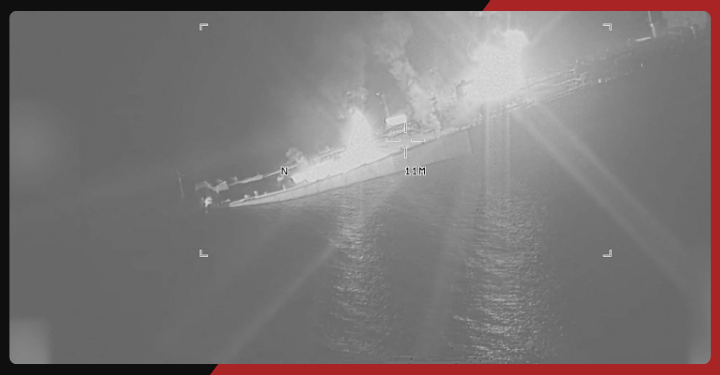
The United States and Iran have exchanged another series of military strikes, with Washington targeting Iranian oil tankers and Tehran responding against American military positions in Jordan and shipping near the Strait of Hormuz.
The latest confrontation reflects a broader strategy in which both countries are attempting to pressure the other through military and economic means.
U.S. Central Command said American forces destroyed five Iranian crude-oil carriers after Iranian missile attacks on a U.S. Navy warship. The American military said the attacks against the tankers were a response to Iran’s actions against U.S. naval forces.
The tankers are also important because of the economic role they play. American officials have alleged that Iranian oil networks help finance the Islamic Revolutionary Guard Corps and associated regional operations.
By targeting the vessels, Washington is attempting to hit Iran’s financial resources without necessarily expanding the operation into a much larger direct attack on Iranian territory.
Tehran’s response has been military.
Iranian forces launched ballistic missiles toward U.S. targets in Jordan. Jordan said its air defenses intercepted most of the missiles, while U.S. officials described the attack as ineffective.
Iran has also increased pressure on maritime traffic.
The Revolutionary Guard has claimed attacks against U.S. vessels and oil tankers and warned ships operating around the Strait of Hormuz.
The strategy creates a complicated battlefield. Instead of fighting exclusively through airstrikes against military bases, the two sides are now competing across naval, economic and missile domains.
The United States can use its naval power to protect shipping and strike Iranian assets. Iran can use missiles and maritime threats to raise the cost of American operations.
The Strait of Hormuz remains central to this confrontation.
Iran knows that threats to shipping can create economic pressure even without completely closing the waterway. The mere possibility of disruption can push up insurance and freight costs.
For Washington, keeping the waterway open is strategically important because it protects international commerce and demonstrates that Iranian threats cannot determine who can use the route.
The conflict has already affected oil markets. Brent crude climbed above $100 per barrel as traders reacted to the latest escalation.
The longer the confrontation continues, the greater the economic consequences could become.
Meanwhile, the involvement of Jordan adds another regional dimension. Jordan is not a direct party to the U.S.-Iran conflict, but the presence of American forces on its territory makes it vulnerable to Iranian retaliation.
Any repeated attacks could put pressure on Amman while also increasing the possibility of broader regional involvement.
Other countries are also watching developments closely because the conflict could affect their energy supplies and commercial shipping.
The United States and Iran now face a delicate strategic calculation.
Washington wants to weaken Iran’s ability to finance military operations while avoiding a conflict that becomes uncontrollable.
Tehran wants to demonstrate that American economic pressure will carry military costs while avoiding a devastating confrontation with superior U.S. forces.
The danger lies in miscalculation.
A successful attack on an American ship or base could produce heavy pressure for retaliation. A new U.S. attack on Iranian oil infrastructure could provoke another round of Iranian missile or maritime attacks.
The latest exchange therefore represents more than another isolated incident. It is part of an increasingly complex confrontation involving oil, naval power, missile technology and regional alliances.
Unless the cycle is broken through diplomacy, each side’s attempt to pressure the other could generate another round of escalation.



More Stories
Harmanpreet Kaur to Continue as Player After Giving Up India Captaincy Across Formats
Bolsonaro Fails to Pull Away as Brazil Election Heads Toward Second Round
Yemen Conflict Intensifies as Army Reports Hundreds of Strikes on Houthi Targets