

In light of increasing opposition to the Waqf (Amendment) Bill 2024, the All India Muslim Personal Law Board (AIMPLB) has modified its protest strategy, particularly in states governed by the Bharatiya Janata Party (BJP). This shift reflects the growing concerns among Muslim communities about the potential consequences of the bill on religious endowments and properties. The AIMPLB’s updated approach comes as protests against the bill continue to intensify, especially in BJP-led regions.
Overview of the Waqf Amendment Bill
The Waqf Amendment Bill 2024 aims to revise the 1995 Waqf Act, including provisions that would permit non-Muslims to be part of Waqf boards and increase governmental supervision of Waqf properties. Proponents of the bill argue that these changes will promote transparency and reduce corruption. However, critics, including the AIMPLB, argue that it undermines Muslim religious autonomy by allowing external influence in managing religious assets, which could potentially lead to the appropriation of significant properties.
AIMPLB’s Nationwide Protests
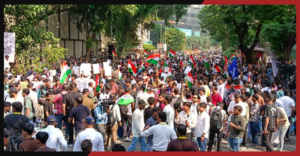
In March 2025, the AIMPLB launched a nationwide campaign against the bill. Muslims across India were encouraged to wear black armbands during the last Friday prayers of Ramadan as a form of peaceful protest. Protests were held in various cities such as Delhi, Patna, and Vijayawada, with prominent Muslim leaders participating. The AIMPLB also initiated an online campaign, asking the Muslim community to send emails to the Joint Parliamentary Committee (JPC) voicing their opposition to the bill. Reports suggest that nearly 6 crore emails were sent, highlighting the widespread opposition to the amendment.
Strategic Shift in BJP-ruled States
Recognizing the political realities in BJP-governed states, the AIMPLB has adapted its approach to avoid potential political retaliation and ensure broader support. In these states, the board is focusing on legal challenges and attempting to build alliances with opposition parties to fight the bill. This revised strategy seeks to unify opposition to the bill on a national level, emphasizing its broader implications for Muslim rights and religious freedom.
Political Reactions and Backlash
The Waqf Amendment Bill has faced strong criticism from various political leaders and organizations. Figures like Asaduddin Owaisi and Maulana Mahmood Asad Madani have declared the bill unconstitutional, claiming it infringes on India’s secular framework. Opposition parties, such as the Congress, have raised concerns that the bill could lead to the privatization of Waqf properties and undermine Muslim rights.
On the other hand, BJP leaders argue that the bill’s changes are designed to improve the management of Waqf properties and ensure transparency. They maintain that allowing non-Muslims to serve on Waqf boards would foster greater diversity and prevent misuse of funds.
Legal and Constitutional Actions
The AIMPLB has also made it clear that it is prepared to challenge the bill through legal channels if it is passed. Board spokesperson S.Q.R. Ilyas stated that the amendments are a deliberate attempt to control Waqf properties, and the board is ready to contest the legislation on constitutional grounds.
Conclusion
The AIMPLB’s updated protest strategy highlights the complex intersection of religious rights, political interests, and legal frameworks in India. As the debate surrounding the Waqf Amendment Bill continues, it is essential to ensure that the voices of Muslim communities are heard and that any decision made takes into account the impact on their religious institutions and rights. The outcome of this issue could significantly shape the future of India’s secularism and minority protections.



More Stories
Harmanpreet Kaur to Continue as Player After Giving Up India Captaincy Across Formats
Bolsonaro Fails to Pull Away as Brazil Election Heads Toward Second Round
Yemen Conflict Intensifies as Army Reports Hundreds of Strikes on Houthi Targets