
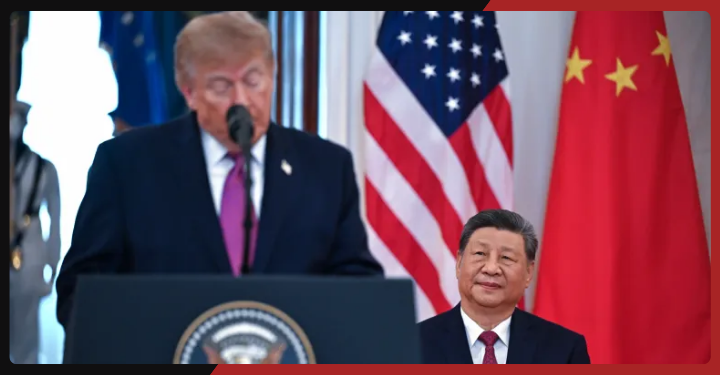
One of the most visible elements of the Washington summit was the personal relationship between Trump and Xi Jinping.
Trump has repeatedly spoken positively about his relationship with Xi, and during the Washington visit he again emphasised their personal connection. Xi has also maintained direct communication with Trump despite the substantial disagreements between their governments.
The importance of personal diplomacy should not be underestimated.
Leaders can sometimes use direct relationships to reduce misunderstandings that might otherwise develop through bureaucratic channels. A private conversation can also allow leaders to communicate concerns more directly and identify areas where negotiations may continue.
The Washington visit itself reflected this emphasis.
Trump personally greeted Xi at Joint Base Andrews, followed by a formal White House welcome and state dinner. The diplomatic symbolism was substantial because Xi had not visited Washington in more than a decade.
The state dinner also brought together senior business and technology figures, reflecting the economic importance of the US-China relationship.
However, personal diplomacy has limits.
A friendly relationship between leaders does not automatically eliminate disagreements between governments. The United States and China have different political systems, economic priorities and strategic objectives.
Trade negotiators still have to resolve tariff questions. Technology officials still have to address export restrictions. Military officials still need communication channels. Diplomats still have to manage disagreements over Taiwan and international conflicts.
This distinction is essential when evaluating the summit.
Positive language from leaders can create a better environment for negotiations, but concrete policy outcomes require detailed agreements.
The current relationship therefore involves two parallel tracks.
At the leadership level, Trump and Xi are attempting to maintain communication and avoid unnecessary escalation.
At the institutional level, officials from both governments continue to negotiate complex disputes involving trade, technology, investment, security and global affairs.
Both tracks are necessary.
Without high-level communication, technical disputes could become politically explosive. Without detailed negotiations, presidential diplomacy could produce symbolism without durable results.
The summit demonstrated this balance.
Trump’s public comments focused heavily on the relationship between the two leaders, while the broader negotiations involved difficult technical subjects.
The same pattern can be seen in other major-power relationships. Leaders can create political space for agreements, but implementation depends on officials, businesses and institutions.
For American and Chinese companies, what ultimately matters is whether policy becomes more predictable.
For governments around the world, what matters is whether US-China relations become more stable.
For security officials, communication mechanisms can be more important than public rhetoric because they provide practical methods for managing crises.
The personal relationship between Trump and Xi therefore represents one component of a much larger diplomatic system.
It can help create opportunities for negotiation, but it cannot independently resolve structural disagreements.
The Washington summit offered another example of this reality. The leaders were able to meet, exchange views and publicly promote stability while leaving many major issues for further negotiations.
That combination is likely to remain characteristic of the relationship.
The United States and China have too many interconnected interests to completely disengage, but they also have too many strategic differences to eliminate competition.
The role of personal diplomacy will therefore remain important, particularly during periods of tension. But its long-term value will ultimately depend on whether it can support practical agreements and reduce the possibility of dangerous escalation.



More Stories
Japan Issues Warnings Across Eastern Regions as Typhoon Dujuan Intensifies Weather Threat
Four Students in BMW Crash on Mumbai Coastal Road; Three Die After Bridge Fall
Saudi-Houthi Conflict Intensifies After Drone Is Intercepted Near Mecca