
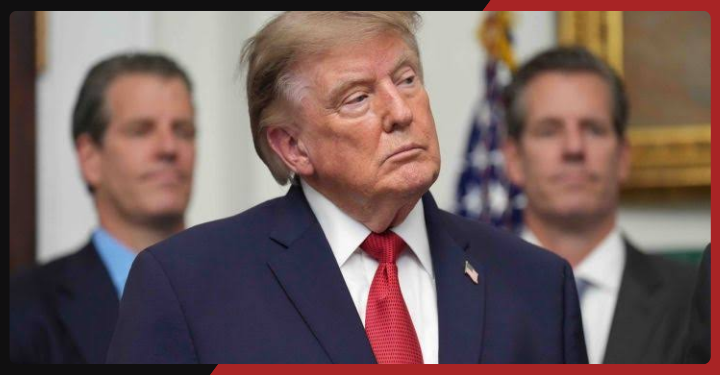
Iran has rejected President Donald Trump’s latest warning of severe economic punishment, setting the stage for another confrontation between Washington and Tehran.
Trump has announced plans for what he describes as an unprecedented campaign of economic warfare and isolation against Iran. He has also warned countries that provide Tehran with financial, commercial or logistical assistance that they could face tremendous consequences.
The announcement represents an expansion of the US strategy. Instead of focusing exclusively on Iran, Washington appears ready to pressure the international network that allows Tehran to maintain trade despite years of sanctions.
Iranian officials have responded by accusing the United States of economic terrorism and dismissing the idea that threats will force Tehran into surrender. Foreign Minister Abbas Araqchi has said Iran remains open to dialogue but has rejected Washington’s approach to negotiations.
The disagreement reflects a fundamental difference between the two governments.
Trump believes maximum pressure can force Iran to make major concessions, particularly over its nuclear program and regional security. Tehran argues that pressure only strengthens resistance and makes genuine diplomacy more difficult.
The latest US strategy could involve intensified restrictions on oil exports, banking transactions, shipping networks and companies that help Iran earn foreign currency.
Iran’s economy has already faced years of sanctions. Additional restrictions could further increase inflationary pressures, reduce government revenues and make it harder for Iranian companies to conduct international business.
However, Iran has demonstrated considerable experience in adapting to sanctions. It has developed alternative trading relationships and financial mechanisms that allow some economic activity to continue.
China remains especially important in this regard because of its commercial relationship with Iran and its role as a major buyer of Iranian oil. Russia and other countries could also provide alternative economic links if Western pressure increases.
That means the effectiveness of Trump’s strategy will depend not only on the severity of American sanctions but also on how other countries respond.
If major economies cooperate with Washington, Iran could face a much deeper economic squeeze. If they resist, Iran could retain important access to international markets.
The conflict is also connected to the Strait of Hormuz, where tensions have disrupted normal commercial activity. The waterway is one of the most important routes for global energy shipments, making the dispute a concern for governments around the world.
A prolonged crisis could affect oil prices, shipping insurance and global inflation. Countries far from the Middle East could therefore feel the effects of the confrontation.
Diplomacy remains possible, but the latest statements indicate that the distance between Washington and Tehran remains wide. Recent diplomatic efforts involving regional and European countries have attempted to create channels for communication, but progress has been difficult.
Trump’s economic threat could either create new incentives for Iran to negotiate or convince Tehran that Washington is seeking regime-level economic isolation.
For now, neither side appears willing to back down.
The next phase of the confrontation will depend on how quickly Washington translates Trump’s warning into specific sanctions and how Iran’s major trading partners respond.
What began as a conflict involving military and nuclear concerns is increasingly becoming a struggle over financial networks, energy markets and international economic alliances. The consequences could shape US-Iran relations for years to come.



More Stories
From California to Britain: Why Harry and Meghan’s Return Is So Significant
Iran Faces New Economic Pressure as UAE Freezes Trade and Finance
Kolkata Hotel Fire Raises Fresh Alarm Over Safety in Crowded Buildings