
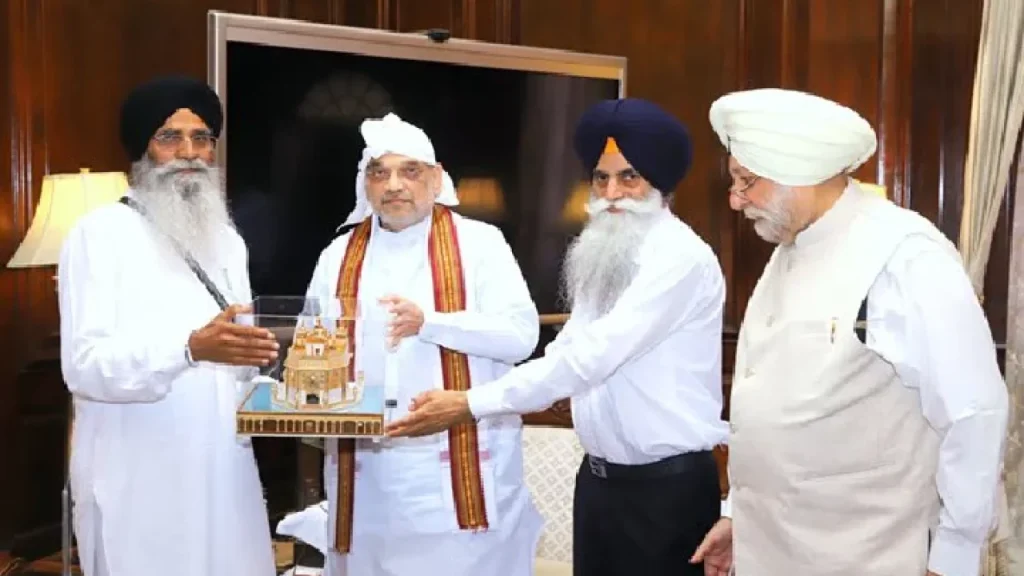
The Shiromani Gurdwara Parbandhak Committee (SGPC), the apex body managing Sikh religious affairs, has raised strong objections to what it describes as “anti-Sikh” remarks made by Home Minister Amit Shah. The SGPC’s criticism, which echoes widespread sentiments among Sikh organizations, follows statements made by Shah regarding the Sikh community during a recent political event. In addition to condemning the remarks, the SGPC has also used the occasion to demand a quota for Sikhs in the Indian Army, highlighting their historical contributions and the community’s strong military presence.
The Controversial Remarks
The remarks by Amit Shah that sparked the controversy were made during a public address where he discussed the role of different communities in the country’s development. According to SGPC, Amit Shah’s comments were derogatory and misrepresented the Sikh community’s role and status within India. While the specifics of Shah’s remarks have been a subject of intense debate, Sikh leaders and religious bodies have accused him of trivializing the community’s history, sacrifices, and contributions to the nation.
For years, the Sikh community has been deeply embedded in India’s military history, with a disproportionate number of Sikhs serving in the Indian Armed Forces. SGPC officials argue that such comments are not only disrespectful but also reflect a broader issue of marginalization. They claim that the remarks are part of a pattern of behavior that undermines the Sikh community’s importance and legacy in the nation’s defense and overall development.
SGPC’s Response and Condemnation
The SGPC, which is responsible for overseeing the religious and cultural practices of Sikhs, immediately issued a statement condemning Amit Shah’s comments. The committee described Shah’s remarks as “divisive” and “inflammatory,” which could deepen existing fault lines within Indian society. The SGPC also called on the government to recognize the Sikh community’s invaluable role in shaping India’s history and society.
In a detailed press release, the SGPC president, Harjinder Singh Dhami, said, “These statements made by the Home Minister are a direct affront to the Sikh community, which has long stood shoulder to shoulder with the nation. We demand an immediate retraction of these remarks and a public apology.”
The SGPC also emphasized the importance of dialogue and mutual respect between the Indian government and the Sikh community. They stated that such statements could exacerbate communal tensions and lead to unnecessary polarization, especially given the complex history between the Sikh community and the Indian state.
Demand for Quota in the Indian Army
In addition to condemning the Home Minister’s comments, the SGPC has reiterated its long-standing demand for a separate military quota for Sikhs in the Indian Army. This demand has been raised multiple times in the past by various Sikh organizations, who argue that Sikhs have historically been overrepresented in the armed forces and continue to make significant contributions to the defense of the country.
The demand for a military quota is rooted in the community’s long and storied history with the Indian Army. Sikhs have served in large numbers in both the British Indian Army and the Indian Armed Forces post-independence. The SGPC and other Sikh organizations point out that Sikhs made up a significant proportion of soldiers during both World Wars and have continued to serve with distinction in the Indian Army, particularly in combat roles.
However, despite their contributions, Sikhs believe they have been denied the appropriate recognition, especially in terms of recruitment and representation in military services. The SGPC has argued that a formal quota would ensure that the Sikh community continues to be adequately represented in the defense forces and receives the recognition it deserves for its long history of service to the nation.
A Historic Legacy in the Armed Forces
Sikh regiments in the Indian Army, such as the Sikh Regiment and the Sikh Light Infantry, have been key to India’s military success in various conflicts, including wars with Pakistan and in peacekeeping missions worldwide. The bravery and valor of Sikh soldiers have become legendary, with numerous battle honors and gallantry awards being won by members of the community. The most famous among these is perhaps the contribution of the Sikh soldiers during World War I and World War II, where they fought alongside British forces.
Sikh soldiers are also known for their distinctive appearance, including the turban, which is an important symbol of Sikh identity. The community’s strong presence in the military is also seen as a reflection of its dedication to the protection and service of the nation. Given this, many in the Sikh community feel that a quota in the army would be a fair recognition of their historical contributions and their ongoing role in securing the country’s borders.
Conclusion
The SGPC’s condemnation of Amit Shah’s remarks and its call for a quota in the Indian Army reflect broader concerns within the Sikh community about their place in modern India. While the Sikh community has always held a special place in the country’s military, the demand for greater recognition continues to be a point of contention. The SGPC’s calls for a military quota and a retraction of Shah’s controversial statements are part of a wider effort to ensure that the Sikh community’s contributions are not overlooked or minimized in the national narrative.
As the situation unfolds, it remains to be seen whether the Indian government will respond to these demands and whether the dialogue between the government and the Sikh community will lead to greater mutual understanding and respect.



More Stories
Nitish Kumar’s Rajya Sabha Move Could Redefine NDA Power Balance in Bihar
Explosions in Tehran After Israel Declares ‘Preventive Strike’ on Iran
Storm Over ‘Underwear Order’: Minister Demands Clarity from BSNL Leadership