
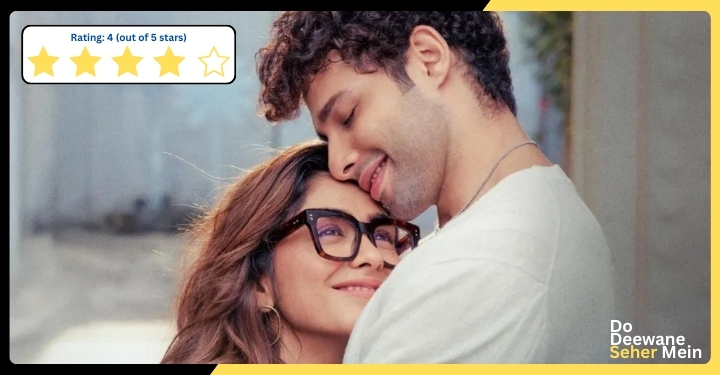
Do Deewane Seher Mein is a refreshing romantic drama that explores modern love in the chaos of city life. Directed by Ravi Udyawar and produced under the creative influence of Sanjay Leela Bhansali, the film brings together two compelling performers—Siddhant Chaturvedi and Mrunal Thakur—in a story that feels intimate, emotionally honest, and deeply relatable.
At its core, Do Deewane Seher Mein is not about grand declarations of love or dramatic twists. Instead, it focuses on the subtle, often messy journey of two individuals trying to understand themselves and each other. In an era where romance is frequently portrayed through spectacle, this film dares to slow down and linger in the quiet moments that define real relationships.
A Story of Two Imperfect Souls
The narrative revolves around two young individuals navigating personal insecurities, professional struggles, and the overwhelming rhythm of metropolitan life. They meet not under extraordinary circumstances, but in a way that feels organic and believable. The beauty of the film lies in how it portrays love not as instant fireworks, but as a gradual unfolding of trust and vulnerability.
The “seher” (city) becomes more than just a backdrop—it acts as a living, breathing character. Its crowded streets, lonely apartments, and fleeting interactions mirror the emotional isolation and longing experienced by the protagonists. The film gently suggests that in a city of millions, finding someone who truly sees you is both rare and transformative.
What sets this story apart is its emphasis on emotional growth. The characters are flawed, occasionally selfish, and sometimes confused. Yet, their journey toward self-awareness and acceptance forms the heart of the film. Love here is not about perfection; it is about choosing each other despite imperfections.
Performances That Feel Effortless
Siddhant Chaturvedi delivers a nuanced performance, capturing the vulnerability of a man who appears confident on the surface but is quietly battling self-doubt. His restrained acting style works beautifully for a film that thrives on subtlety. Rather than dramatic outbursts, his character communicates through expressions, pauses, and body language.
Mrunal Thakur shines with emotional depth and grace. She portrays her character with a mix of strength and fragility, making her instantly relatable. Her ability to convey complex emotions without overacting adds authenticity to the narrative. The chemistry between the two leads feels natural, never forced. Their shared silences often speak louder than words, creating moments that linger long after the scene ends.
The supporting cast adds texture to the story, offering glimpses into family expectations, friendships, and societal pressures that influence the protagonists’ decisions. These secondary characters are not mere fillers; they contribute meaningfully to the emotional landscape of the film.
Direction and Narrative Tone
Ravi Udyawar’s direction leans toward minimalism and emotional realism. He avoids unnecessary melodrama and instead allows scenes to breathe. The pacing is deliberate, which may not appeal to viewers expecting high-energy drama, but it perfectly suits the film’s introspective nature.
The screenplay prioritizes conversations and character development over plot twists. While the story may appear simple on the surface, its emotional layers make it compelling. The dialogues feel conversational rather than theatrical, enhancing the sense of authenticity.
At times, the film risks being too understated. A few sequences could have benefited from tighter editing to maintain momentum. However, the overall tone remains consistent, and the emotional payoff justifies the slower pace.
Music and Visual Appeal
The music plays a significant role in shaping the film’s emotional atmosphere. The soundtrack blends contemporary melodies with soulful undertones, complementing the narrative without overwhelming it. Songs are woven naturally into the story, often emerging during moments of introspection or quiet realization.
Visually, the film captures the contrast between the bustling city and the intimate spaces where love quietly blossoms. The cinematography highlights warm lighting and muted tones, reflecting the internal journeys of the characters. The city is portrayed both as chaotic and beautiful, reinforcing the theme that love can exist even in the most overwhelming environments.
Themes That Resonate
One of the film’s strongest aspects is its exploration of modern relationships. It addresses issues such as fear of commitment, emotional baggage, and the pressure to appear successful. In doing so, it resonates with a generation that often struggles to balance personal dreams with emotional fulfillment.
The film also subtly challenges the idea of “perfect love.” Instead of presenting an idealized romance, it acknowledges misunderstandings, arguments, and emotional distance. Yet, it ultimately suggests that love is about patience, communication, and the courage to be vulnerable.
Another underlying theme is self-discovery. Both characters must confront their insecurities before they can fully embrace each other. This emphasis on personal growth adds depth to what could have otherwise been a conventional love story.
Final Verdict
Do Deewane Seher Mein is a heartfelt romantic drama that values sincerity over spectacle. It may not cater to audiences seeking high drama or extravagant visuals, but it offers something equally powerful—emotional truth. With strong performances from Siddhant Chaturvedi and Mrunal Thakur, thoughtful direction by Ravi Udyawar, and a soothing musical backdrop, the film leaves a gentle yet lasting impact.
This is a story for those who believe that love does not always arrive with fireworks; sometimes, it arrives quietly, in the middle of a crowded city, and changes everything. If you appreciate romance that feels real and reflective, Do Deewane Seher Mein is a journey worth taking.
Rating: 4 out of 5 stars.




More Stories
Sandeepa Dhar Highlights the Mental Health Impact of Beauty Norms in Cinema
Corporate Strategy Meets Creative Vision: HYBE Responds to Min Hee Jin’s Proposal
Veer Murarbaji: The Battle of Purandar — Movie Review