
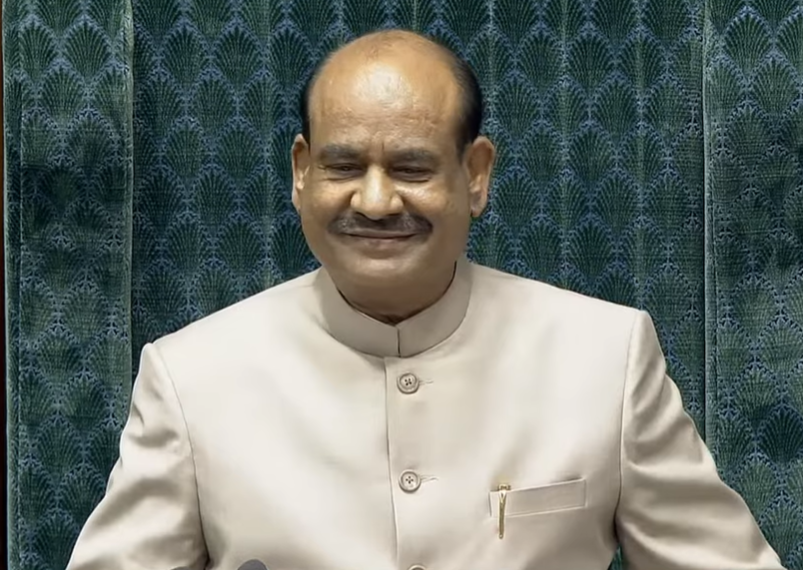
Speaker Om Birla Says He Advised PM to Skip Lok Sabha Amid ‘Definite Inputs’ of Opposition Protests
Lok Sabha Speaker Om Birla revealed that he had advised Prime Minister Narendra Modi not to attend a recent sitting of the Lower House after receiving specific intelligence about possible Opposition protests. The disclosure has triggered political debate, with both the ruling alliance and Opposition offering sharply different reactions.
Precautionary Step Before House Proceedings
Birla said the advice was given as a preventive measure to ensure the smooth functioning of Parliament. He stated that he had “definite information” suggesting that some Opposition members were preparing to stage aggressive protests during the session.
According to the Speaker, the inputs pointed toward potential disruption beyond routine sloganeering, prompting concern over maintaining order inside the House.
Concerns Over Possible Confrontation
The Speaker indicated that some MPs were expected to move close to the Prime Minister’s designated seating area during proceedings. Such an act, he suggested, could have led to an uncomfortable or chaotic situation on the floor of the Lok Sabha.
To avoid confrontation and preserve decorum, Birla said he felt it appropriate to advise the Prime Minister to temporarily stay away from the session in question.
Responsibility to Maintain House Decorum
Emphasizing his constitutional role, Birla noted that the Speaker’s foremost duty is to uphold the dignity and orderly conduct of parliamentary business. Any development that risks disorder must be handled proactively.
He maintained that his decision was guided purely by institutional responsibility and not by political considerations.
Government Backs Speaker’s Decision
Leaders from the ruling side defended the Speaker’s move, arguing that repeated disruptions have often derailed legislative functioning. They said precautionary steps were necessary to ensure debates and official business could proceed without obstruction.
Government representatives also reiterated calls for constructive Opposition participation through established parliamentary procedures.
Opposition Questions the Move
Opposition parties, however, criticized the development, suggesting that advising the Prime Minister to skip the House sends the wrong signal for democratic functioning.
Some leaders argued that protest within Parliament is a legitimate expression of dissent, especially when Opposition parties feel key issues are not being adequately addressed.
Recurring Disruptions in Recent Sessions
Parliament has witnessed frequent adjournments in recent years due to protests over political controversies, economic matters, and national security debates. Demonstrations in the well of the House have become a recurring feature during high-tension sessions.
Speakers have repeatedly urged members to follow procedural mechanisms rather than resort to disruptions.
Balancing Dissent and Discipline
Constitutional experts say Parliament must accommodate dissent while ensuring legislative productivity. The Speaker’s office plays a crucial role in maintaining this balance.
Birla reiterated that all members, regardless of party affiliation, share responsibility for preserving the dignity of India’s highest legislative forum.



More Stories
Rahul Gandhi’s Detention Deepens Political Clash Over India’s Electoral Process
Harmanpreet Kaur to Continue as Player After Giving Up India Captaincy Across Formats
Bolsonaro Fails to Pull Away as Brazil Election Heads Toward Second Round