
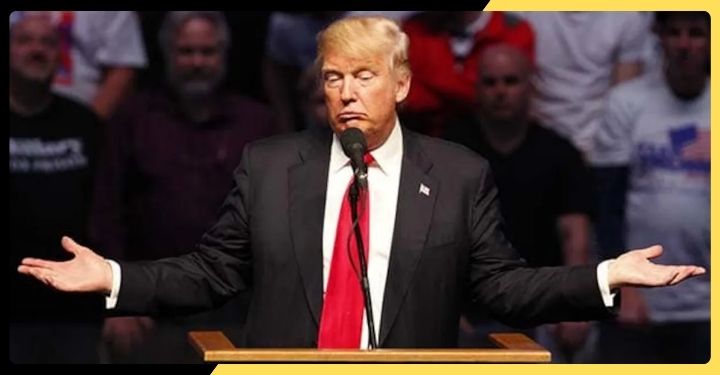
Former U.S. President Donald Trump’s long-standing fixation on Greenland has once again sparked debate, this time over his claim that China poses a strategic threat to the Arctic island. According to Trump, Beijing’s growing global ambitions make Greenland a potential target, a claim that some experts have dismissed outright as “nonsense,” arguing that it reflects a misunderstanding of both Greenland’s political reality and China’s actual interests in the region.
Greenland, the world’s largest island, is an autonomous territory within the Kingdom of Denmark. While it has significant control over its internal affairs, foreign policy and defense remain largely under Danish authority. Trump first drew global attention to Greenland in 2019 when he floated the idea of purchasing the island, a proposal that was swiftly rejected by Danish and Greenlandic officials and widely ridiculed by international observers. At the time, Trump framed Greenland as strategically vital to U.S. national security, citing its location in the Arctic and its proximity to emerging shipping routes and military interests.
In more recent remarks, Trump has reportedly suggested that China’s expanding influence makes Greenland vulnerable, implying that Beijing could seek to dominate or control the territory if the United States does not act decisively. This assertion, however, has been met with skepticism from Arctic scholars and security analysts. One such expert bluntly characterized the claim as “nonsense,” noting that while China has shown interest in the Arctic, there is no credible evidence that it poses an imminent threat to Greenland’s sovereignty.
China has indeed branded itself a “near-Arctic state” and has invested in scientific research, infrastructure projects, and diplomatic engagement across the Arctic region. These activities have fueled concerns in Washington and other Western capitals about Beijing’s long-term strategic intentions. However, experts emphasize that interest does not equate to threat. In Greenland’s case, Chinese involvement has been limited and heavily scrutinized. Proposed Chinese investments in airports and mining projects have faced resistance and, in some cases, intervention from Denmark and the United States.
Analysts argue that Trump’s framing oversimplifies a complex geopolitical landscape. Greenland’s strategic importance is undeniable, particularly as climate change opens new Arctic shipping routes and access to natural resources. The United States already maintains a significant military presence on the island through Thule Air Base, a key component of U.S. missile defense and space surveillance systems. This presence, experts say, already addresses most realistic security concerns, making the idea of China “taking over” Greenland highly implausible.
Moreover, Greenland’s own political leadership has consistently emphasized that the island is not for sale and that its future will be decided by its people. Greenlandic officials have expressed interest in foreign investment to support economic development, but they have also stressed the importance of transparency and sovereignty. The notion that China could simply step in and gain control ignores these political realities and underestimates the agency of Greenland’s population.
Critics of Trump’s claim also suggest that invoking China as a threat serves more as a political narrative than a policy-based assessment. Casting Beijing as a looming danger has become a familiar theme in U.S. political discourse, particularly among those advocating for a more confrontational approach to China. By linking China to Greenland, Trump reinforces a broader message of strategic competition, even if the specific claim lacks factual grounding.
That said, some analysts caution against dismissing Arctic geopolitics entirely. The region is becoming increasingly important as ice melts and access improves. Russia has expanded its military footprint in the Arctic, and China’s long-term interests, particularly in shipping and resource access, are real. However, experts stress that these developments require nuanced policy responses rather than dramatic assertions. Overstating threats, they argue, risks undermining cooperation and alienating allies such as Denmark.
The Danish government has also pushed back against the idea that Greenland is vulnerable to foreign takeover. Danish officials have repeatedly affirmed their commitment to Greenland’s security and have worked closely with the United States to address shared concerns. For Copenhagen, Trump’s comments revive an uncomfortable chapter in transatlantic relations, reminding many of the diplomatic fallout from his earlier proposal to buy the island.
Ultimately, experts say that Trump’s claim about China threatening Greenland says more about his worldview than about the actual situation in the Arctic. It reflects a tendency to view international relations through a lens of zero-sum competition and territorial acquisition, a perspective that clashes with the legal, political, and social realities governing Greenland.
As the Arctic continues to gain strategic importance, informed debate and careful diplomacy will be essential. Greenland’s future will be shaped by climate change, economic development, and the aspirations of its people—not by exaggerated fears of foreign conquest. While vigilance is warranted in a rapidly changing region, experts argue that labeling China as a direct threat to Greenland is not only inaccurate but also distracts from the real challenges and opportunities facing the Arctic today.




More Stories
Saudi-Houthi Conflict Intensifies After Drone Is Intercepted Near Mecca
Noida Airport Gets High-Profile Role Ahead of 18th BRICS Summit in Delhi
Iran Targets US Forces as Washington Escalates Pressure on Tehran’s Oil Network